Eddy Prado
Author
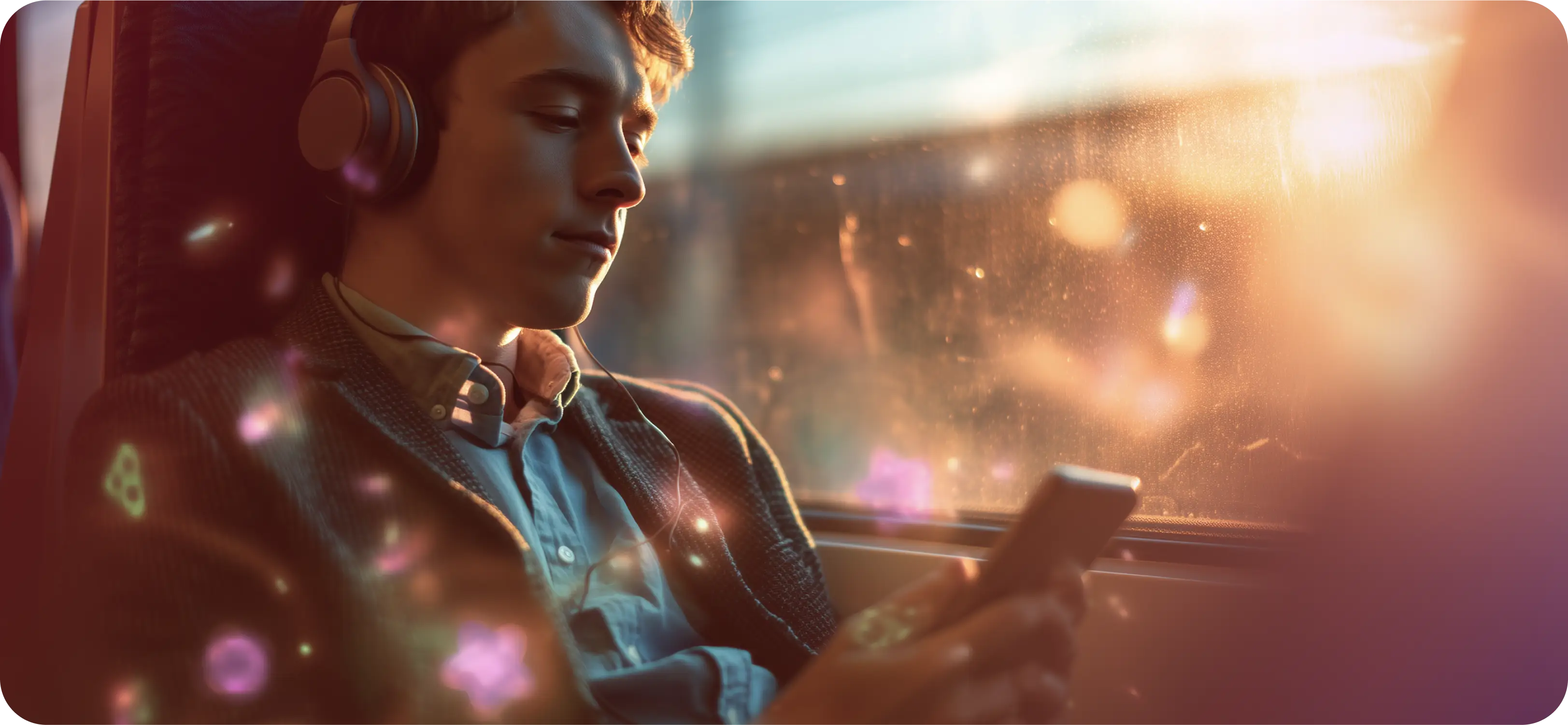
Picture this: you're on the train after a long work day. Headphones on. Phone out. You open your favorite mobile game and for a few minutes, everything disappears—no inbox, no feed, no mindless scrolling. Just a quick challenge, a splash of color, a tiny win. That kind of moment is rare in modern media. It's also where brands can meet people in a better, more welcoming way.
We call it the Gaming Mindset. It’s the psychological state players enter when they engage with mobile games. It’s not background noise or second-screen filler. It’s a short, focused pause when people feel relaxed, attentive, and open to something they can actually use. A moment where good creative has a real chance to land.
What the Gaming Mindset looks like
Relaxed.
Most people play mobile games to unwind. It’s become a daily ritual.You can see this in broad consumer studies that track motivations for play. Newzoo’s latest research digs into why people play and points to relaxation and enjoyment as top drivers, especially on mobile where sessions fit around life. Their 2024 edition is a clear, current map of behaviors and motivations across markets, and it helps teams plan against real player needs rather than guesswork.
Focused.
Good games pull you in just enough. Not forever—just long enough to create real attention. That difference matters for advertising. When someone plays, their eyes and hands are active, which changes how messages are seen and processed. Activision Blizzard Media’s 2024 work blends eye-tracking with neuroscience to show that immersion boosts ad attention and impact during actual gameplay. It’s proof that focus is available when creative and placements respect the flow.
Receptive.
Mobile gamers often choose to watch an ad in exchange for something they value, like a reward that helps them progress. That opt-in makes advertising feel fair and helps with recall and sentiment. The ESA’s 2024 Essential Facts report shows how mainstream mobile gaming has become and highlights the benefits players associate with it—like stress relief. All of this strengthens the case that gaming can foster positive brand moments when handled with care.
Why this matters right now
Marketers are fighting for time in a day that isn’t getting any longer. People are just spreading their attention across more screens. Deloitte’s Digital Media Trends 2024 describes a landscape where streaming, social, and gaming blend into one media habit, and brands need to plan for that convergence rather than treat each channel as an island. In other words, the job is to find moments that are both high quality and repeatable. Gaming supplies a steady supply of those moments, particularly on mobile where micro-sessions happen several times a day.
It’s also a creative opportunity. In a relaxed, focused, receptive state, the same brand story hits differently. A quick playable that lets someone try a feature, a rewarded video with a clear value exchange, or an in-game placement that feels like it belongs—none of these need to be heavy lifts. They just need to fit the moment. Light, respectful, and designed for the rhythm of play. The brand shows up like a helpful guest, not a noisy neighbor.
Planning with the mindset in mind
Start with people, not formats. Who is your audience, and what do they play on a typical day. Newzoo’s segmentation helps here because it pairs motivations with platform habits, so you can place the right creative near the right moments rather than blasting the same asset everywhere.
Then shape the creative. Rewarded ads earn attention because the value exchange is obvious and fair. Playables let someone experience the idea quickly and decide if it fits. Intrinsic in-game placements work when they blend with the environment and keep the rhythm of play. Small touches travel far on a phone. A clear visual, a purposeful motion, a line that says just enough. If your team likes a test-and-learn loop, this is a forgiving space to run it because the sessions are frequent and the signals are fast.
Finally, measure what matters. The best mindset means little if you grade the work with the wrong ruler. Look for evidence that people actually saw and processed your message during play, then tie that to near-term actions that predict outcomes for your brand. The ESA report helps ground expectations about who plays and why, while ABM’s immersion work explains why some formats generate deeper attention during live play. Together, they make it easier to defend a plan that tilts toward gaming without relying on vague notions of “time spent”.
The Admazing advantage
Admazing is built around the Gaming Mindset. We help brands show up in those short windows when people feel good, pay attention, and welcome a fair exchange. Our planning starts by mapping audience motivations to the games and moments they actually visit each day. Not a spray-and-pray schedule. A focused plan that pairs the right creative with the right session.
From there, we design native experiences that fit the flow of play. Rewarded video that people choose to watch. Playables that invite a quick try. Intrinsic in-game placements that feel like part of the world rather than a pause screen. On mobile, subtlety matters, so we keep everything clear, fluid, and on-brand.
Admazing Games IQ ties it all together. We blend first-party insight with live campaign signals to pick the best titles, placements, and moments, then optimize for outcomes that matter to your business. We verify delivery with partners such as IAS and DoubleVerify and place special emphasis on the first session of the day, when focus tends to peak.The result is simple: by pairing the Gaming Mindset with Games IQ, we help your brand reach the right people, at the right moment, in a better mood, and in a more attentive state, with formats they welcome and remember.